
deane and woodward
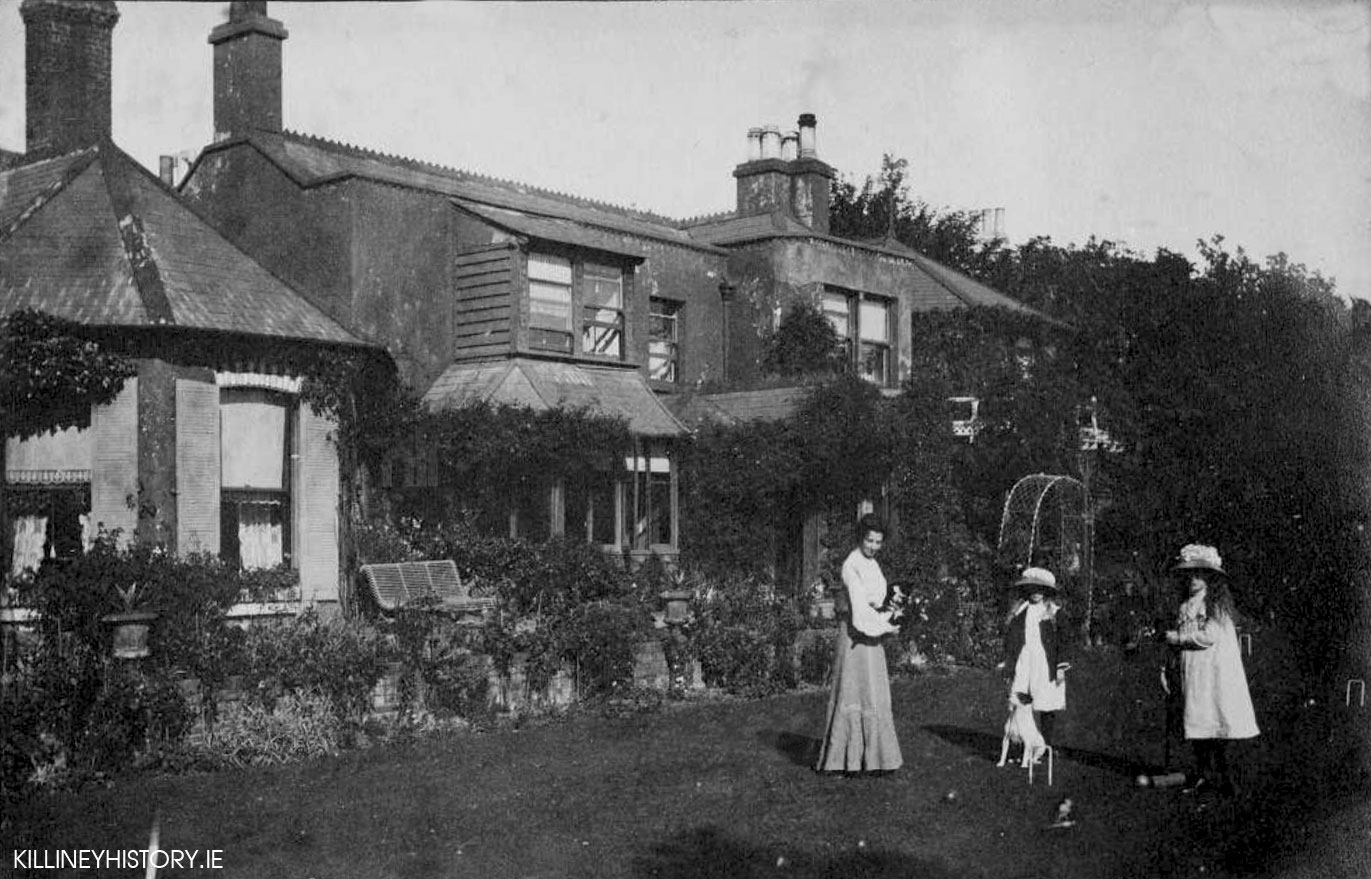
Killacoona
Killacoona House is now incorporated into the Holy Child convent school, and, like The Grove and Carrigrennane, it was a large, redbrick, Tudor-style house, built facing south with views of Bray Head in the distance.
Undercliff
The most successful architecturally is Francis Robinson’s Undercliffe, undoubtedly Woodward’s work and the apparent prototype from which the others were derived. The lease of Undercliffe was the first to be registered, on 13 February 1861, and it seems likely that it was also the first house to be started.

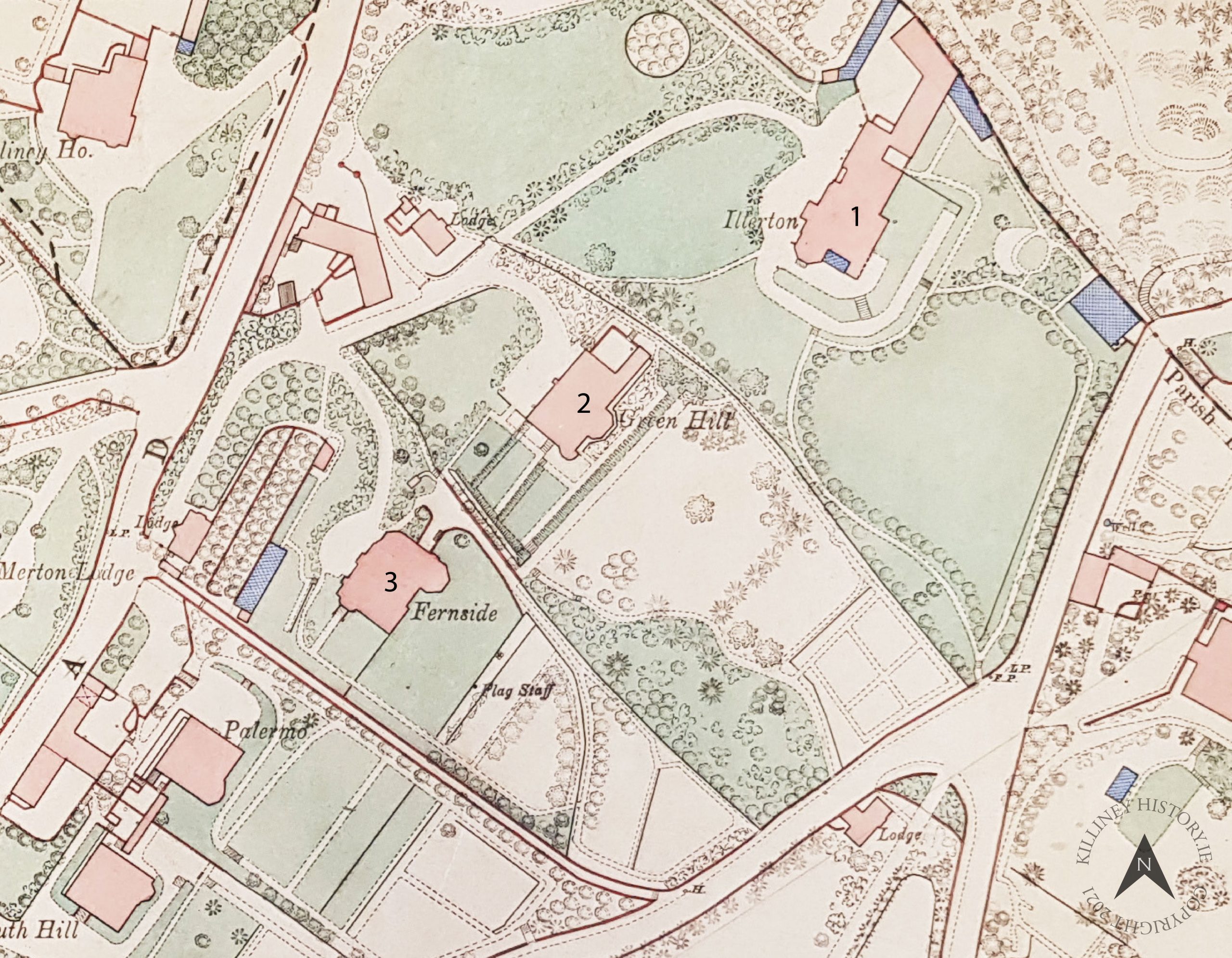
Illerton
The elevations and chimneys have a liberal sprinkling of Jacobethan ornament. The porch is probably original, though it looks like an addition. The kitchen and servants’ quarters are separately articulated under a straightforward, and relatively low, hipped roof,
The Killiney Houses of Deane & Woodward Architects
The only reference to Deane and Woodward’s domestic works to be published in the columns of The Dublin Builder appeared in the issue of 15 February 1861. In a piece on house building in Ballybrack, County Dublin, the writer referred in passing to six new dwelling houses being built to their designs, including one for Joseph Robinson, ‘the eminent opera singer’.

Cliff House (previously Green Hill)
Joseph Robinson’s Green Hill is a cross between Undercliffe and Fernside in that it has a turret and a projecting bow. The turret is placed in the angle of the drawing-room wall. One of the chimneystacks is placed at a 45 degree angle as at St Austin’s Abbey, while the entrance has a Gothic arch
Fernside
Robert Exham’s own Fernside was not begun until early in 1861. The Dublin Builder article indicated that the foundations had been laid out by 15 February. However, arrangements were clearly being made before Woodward’s final departure for the continent in mid-December 1860.

Court-na-Farraige
The Court Hotel, formerly a private house called Court-na-Farraige, also belongs to this group of fanciful, French chateau-inspired houses. It was designed in 1865, probably by the architect T. N. Deane for William Exham